
Ion Exchange in Wastewater: Principles and Applications
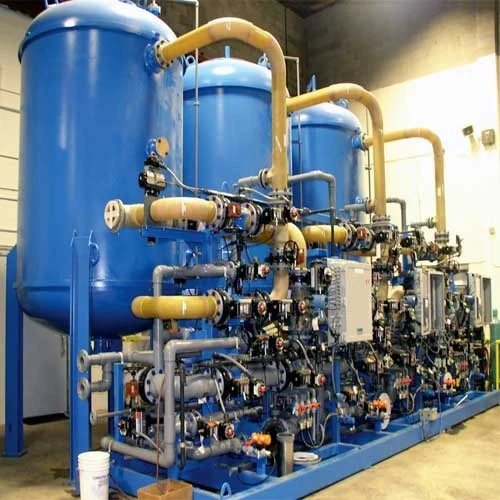
Ion exchange is one of the advanced treatments. It is a vital process in wastewater treatment, involving the reversible interchange of ions between a solid substance, or resin, and a liquid solution—in this case, wastewater. It is a purification and separation method used extensively to remove undesirable ions, such as calcium, magnesium, and other heavy metals, introduce more desirable ions, or simply neutralize the liquid. The effectiveness and specificity of ion exchange depend on the properties of the resins used, chemically tailored to preferentially bind specific ions.
In wastewater treatment, ion exchange resins are employed to treat waste streams efficiently. These resins are bead-like structures, traditionally made from an insoluble matrix, that tackle various contaminants. The design and operation of ion exchange systems are highly specialized to cater to specific industrial needs and ensure regulatory compliance. Over time, these resins become saturated and lose their effectiveness. Still, they can often be regenerated through a process that restores their ion exchange capacity, extending their service life and reducing waste.
Two characteristics distinguish ion exchange from every other treatment process in this category. The first is that it separates rather than destroys: the target ion is not converted into something harmless, it is moved from the water onto the resin and later moved from the resin into a concentrated waste stream. That waste stream, not the treatment itself, is usually what determines whether ion exchange is viable at a given site. The second is selectivity. Resins have a preference order among ions, and that preference is what allows a properly chosen resin to pull a specific contaminant out of a water containing far larger concentrations of everything else.
Selectivity also creates the process’s most consequential failure mode. Because a resin holds preferred ions more tightly than less preferred ones, an exhausted bed can release a previously captured contaminant back into the treated water at a concentration higher than the influent, displaced by an ion the resin prefers more. Nitrate removal is the classic case, and it is the reason nitrate ion exchange systems require careful monitoring, blending, and run-length control rather than simply being operated until breakthrough.
Key Takeaways
- Ion exchange is a critical process in removing unwanted ions and treating wastewater.
- The design and operation of ion exchange systems are specialized for industrial applications.
- Resins used in ion exchange can often be regenerated, allowing for repeated use.
Basics of Ion Exchange
Ion exchange is a widely employed method for water treatment that facilitates the removal of undesirable ions from water and replaces them with other, more preferred ions. This process is critical in water softening, purification, and various applications in industrial water treatment.
Cation Exchange
In the cation exchange process, positively charged ions, such as calcium (Ca²⁺) and magnesium (Mg²⁺), are replaced by similarly charged ions, typically sodium (Na⁺) or hydrogen (H⁺). This exchange occurs in a medium, often comprising natural zeolites or synthetic resin beads. As water passes through the ion exchange resin, the resin beads bind the undesirable cations and release an equivalent number of sodium or hydrogen ions back into the water.
Cation resins divide into two functional families. Strong acid cation resins carry sulfonic acid groups, work across the full pH range, and are the workhorse of both softening in the sodium form and demineralization in the hydrogen form. Weak acid cation resins carry carboxylic acid groups, exchange only against alkalinity, and are therefore limited to dealkalization and hardness associated with bicarbonate — but they regenerate at close to stoichiometric efficiency, which makes them far cheaper to operate where the water chemistry suits them.
Anion Exchange
Conversely, anion exchange targets negatively charged ions like chloride (Cl⁻) and sulfate (SO₄²⁻). It uses anion exchange resins usually attached to quaternary ammonium groups, which attract and exchange the target anions with more innocuous ones, such as hydroxide (OH⁻) or chloride (Cl⁻), depending on the resin used. The treated water emerges with diminished levels of unwanted anions, thus making it more suitable for various applications.
The same strong and weak division applies here. Strong base anion resins remove all anions including weakly ionized silica and carbon dioxide, which is what makes them essential in demineralization, but they regenerate inefficiently and are vulnerable to fouling by natural organic matter. Weak base anion resins remove only the anions of strong acids, cannot touch silica, and regenerate very efficiently. Anion resins also carry most of the modern selective chemistry: nitrate-selective resins that resist sulfate competition, and the single-use resins now widely deployed for PFAS removal.
Subcategory Overview: Topics Within Ion Exchange
This category spans the underlying exchange mechanism, the two resin families and their functional variants, the softening application that accounts for most installed capacity, and the equipment supply landscape. The subsections below cover each.
The Ion Exchange Mechanism
Coverage of the ion exchange process works through what actually happens at the bead. The resin is a crosslinked polymer matrix carrying fixed charged functional groups, each balanced by a mobile counterion. When water passes through the bed, ions in solution compete with those counterions for the fixed sites, and the resin’s affinity order determines which wins. Exchange is stoichiometric and reversible, which is why regeneration works: flooding the bed with a high concentration of the original counterion drives the equilibrium backward and strips the accumulated contaminant off. Understanding that the process is an equilibrium rather than a filter is what explains breakthrough behaviour, regeneration efficiency, and the chromatographic displacement effects that catch operators out.
Cation Exchange Resins
Cation exchange resins are covered in depth in terms of matrix type, functional group, ionic form, crosslinking, and capacity. Crosslink density is the parameter with the widest practical consequences: higher crosslinking gives greater physical strength and resistance to oxidative attack but lower moisture content and slower kinetics, while lower crosslinking gives faster exchange but beads that swell more and fracture sooner. Oxidant exposure matters more than most specifiers expect, since free chlorine progressively degrades the polymer backbone, and residual chlorine in the feed is a common cause of premature resin failure that gets attributed to fouling.
Ion Exchange Water Softeners
Ion exchange water softeners represent the single largest application of the technology, from residential units through to industrial boiler feed pretreatment. A softener is a strong acid cation resin in the sodium form, cycling through service, backwash, brine regeneration, and rinse. The design decision that matters most is salt dose, because it trades directly against capacity: a low salt dose regenerates the resin incompletely but uses the salt efficiently, while a high dose recovers more capacity per cubic foot of resin at a much worse salt-to-capacity ratio. Where brine discharge is restricted, the low-dose, larger-vessel configuration is usually the right answer despite the higher capital cost.
Ion Exchange Equipment and Suppliers
The ion exchange manufacturers area covers the supply landscape across resin producers and system integrators, which are frequently different companies. Resin selection and vessel design are separable decisions, and a specification that names a resin type and its required properties gives more useful leverage than one that names a system supplier alone. The practical differentiators among suppliers are technical support on resin selection for an unusual water, availability of resin testing and diagnostic services, and lead time on replacement resin, which can be long for specialty products.
Ion Exchange Resins
Ion exchange resins are specially formulated polymers that exchange ions in a solution with ions bound to the resin. They play a crucial role in water treatment processes, especially in removing and replacing undesirable ions with acceptable ones.
Boron Selective Resins
Boron selective resins are designed to target and remove boron compounds from water. They feature functional groups that preferentially bind boron ions, often used in industrial or agricultural settings where boron concentration must be tightly controlled.
Nitrate-Selective and PFAS Resins
Two selective chemistries account for most current growth in municipal ion exchange. Nitrate-selective resins use bulkier functional groups that reverse the normal affinity order so the resin prefers nitrate over sulfate, which is essential because ordinary strong base anion resin prefers sulfate and will dump previously captured nitrate as sulfate displaces it. PFAS-selective resins are built for a different economics entirely: they are typically operated single-use rather than regenerated, because regenerating them would simply concentrate the PFAS into a liquid waste with no straightforward disposal route. Spent PFAS resin is instead handled as a solid waste, and disposal cost dominates the lifecycle economics of those systems.
Electrochemical Ion Exchange
Electrochemical ion exchange (EIX) combines ion exchange technology with electrochemical processes to enhance ion exchange efficiency. In EIX systems, an electric current propels the ions towards the resin, facilitating a more efficient and effective exchange process, particularly advantageous in water treatment applications.
Ion Exchange in Wastewater Treatment
Ion exchange is frequently utilized in wastewater treatment to remove undesirable ions from water, replacing them with other ions of a similar electrical charge. This method is especially effective for treating waste streams containing heavy metals, nutrients, or specific non-metallic ions.
Ammonion Exchange
Ammonion exchange is a targeted form of ion exchange designed to remove ammonium ions selectively (NH₄⁺) from wastewater. The process employs a resin that binds explicitly to ammonium ions, efficiently lowering their concentration in the treated water. This is particularly useful in municipal wastewater plants where reducing ammonium levels is crucial to meet regulatory standards for discharge.
The medium usually used for this duty is clinoptilolite, a natural zeolite with an unusually strong preference for ammonium over the sodium, calcium, and magnesium that dominate most wastewaters. That natural selectivity is what makes the application work at all, since a conventional cation resin would be exhausted by hardness long before it captured meaningful ammonium.
Mixed Bed Ion Exchange
A resin bed composed of cation and anion exchange resins is used in mixed bed ion exchange systems. This setup allows for the simultaneous removal of positively and negatively charged ions from the wastewater. Mixed bed ion exchange is commonly employed as a polishing step to produce high-purity water required in industrial processes. It effectively removes residual ions, ensuring water quality meets stringent specifications.
Mixed beds achieve far higher purity than separate cation and anion vessels in series because the two resins are intimately mixed, so the water passes through an effectively infinite number of alternating exchange stages rather than two. The complication is regeneration: the resins must be hydraulically separated by backwashing, which exploits their different densities, then regenerated separately and remixed. Many facilities avoid that difficulty by sending exhausted mixed bed resin offsite for regeneration or by treating it as a replaceable consumable.
Design and Operation of Ion Exchange Systems
Ion exchange systems are crucial for water treatment, especially when softening hard water and removing contaminants. The operation hinges on ion exchange resins that swap unwanted ions in the water with desirable ones. Sodium or hydrogen ions are exchanged for hardness ions like calcium and magnesium.
Components:
- Resin Tanks: Contain the ion exchange resin, typically made of polystyrene beads.
- Control Valves: Manage the flow of water through the system.
- Brine Tank: Holds salt solution used to regenerate the resin beads.
Design Considerations:
- Resin Selection: Based on water composition, cation-exchange resins are commonly used.
- Capacity: Determined by the amount of resin and its exchange capacity.
- Flow Rates: Optimized to ensure adequate contact time and ion exchange.
Operational Phases:
- Service Cycle: Where hard water passes through the resin, and the exchange of ions occurs.
- Backwash: Involves reversing water flow to flush out solids and residue from the resin bed.
- Regeneration: A sodium-rich brine solution transfers sodium ions to the resin, displacing the accumulated hardness ions.
- Rinse: Removes excess brine from the system, preparing it for another service cycle.
The effectiveness of an ion exchange system for water treatment depends on proper maintenance, including regular regeneration and monitoring of the system’s performance. The setup must be calibrated to account for specific water quality requirements, ensuring a consistent supply of treated water.
Selection and Specification Framework
Step One: Complete the Water Analysis Before Anything Else
Ion exchange design requires a full ionic analysis, not a partial one. Every cation and anion must be quantified because they all compete for exchange sites, and the analysis should balance: total cations expressed as equivalents should equal total anions. An unbalanced analysis means something was missed, and the missing ion will consume capacity the design never accounted for. Include the parameters that damage resin rather than merely load it: free chlorine and other oxidants, iron and manganese, natural organic matter, and suspended solids. A design built on hardness and the target contaminant alone will under-deliver on capacity and over-deliver on trouble.
Step Two: Choose the Resin Family Against the Objective
Softening calls for strong acid cation in the sodium form. Dealkalization calls for weak acid cation or chloride-form anion, depending on whether hardness or alkalinity is the objective. Demineralization requires cation followed by anion, with strong base anion needed if silica must be removed and mixed bed polishing if very high purity is required. Single-contaminant removal — nitrate, uranium, perchlorate, PFAS — calls for a resin selected specifically against that ion and its competitors. Matching the family to the objective before comparing products avoids the common error of specifying a general-purpose resin for a selective duty.
Step Three: Check the Selectivity Order for Displacement Risk
This step is what separates a safe design from a hazardous one. Work out which ions the chosen resin prefers over the target, because those ions will displace previously captured target as the bed approaches exhaustion, and the effluent concentration can briefly exceed the influent. Nitrate on conventional strong base anion resin is the well-known case, but the effect applies generally. The mitigations are a selective resin, a conservatively short run length, continuous effluent monitoring with automatic lockout, blending, or multiple vessels operated in a lead-lag arrangement so a partially exhausted bed is always polished by a fresh one.
Step Four: Design the Regeneration Around the Waste, Not Just the Capacity
Regenerant waste is a high-strength, high-salinity stream, and its disposal route frequently governs the whole project. Sewer discharge may be limited by a salinity or chloride limit at the receiving plant. Surface discharge is usually impossible. Evaporation ponds and deep well injection are site-specific. Some jurisdictions restrict self-regenerating softeners outright for this reason. Establish the disposal route first, then set the salt dose and regeneration frequency to fit it, accepting a larger resin volume if that is what reducing regenerant volume requires.
Step Five: Size on Capacity and Contact Time Together
Two criteria govern vessel sizing and the more restrictive controls. Total exchange capacity determines run length between regenerations at the design ionic load. Empty bed contact time determines whether the exchange kinetics have time to complete at the design flow, and it is usually the binding constraint for selective removal duties where the target is present at trace concentration. Softening is typically capacity-limited; nitrate and PFAS removal are typically contact-time-limited. Sizing on capacity alone produces a vessel that passes contaminant at design flow despite having plenty of unused capacity.
Step Six: Compare Against the Alternatives
Ion exchange competes with several processes and is not automatically the right answer. For hardness and metals, chemical precipitation handles high concentrations far more economically, though it produces sludge rather than brine and cannot reach the low residuals ion exchange achieves. Membranes remove a broad spectrum at once but consume energy and produce their own concentrate. Adsorption on activated carbon suits uncharged organics that ion exchange cannot touch. The broader set of options and how they interact is covered under chemical treatment methods. Ion exchange earns its place where a specific ion must be reduced to a low residual and the resulting waste stream can be managed.
Comparison Tables
| Resin Type | Functional Group | Removes | Typical Regenerant | Regeneration Efficiency | Key Limitation |
|---|---|---|---|---|---|
| Strong acid cation (SAC) | Sulfonic acid | All cations; hardness in Na form, all cations in H form | Sodium chloride or acid | Moderate; excess regenerant required | Degraded by free chlorine and oxidants |
| Weak acid cation (WAC) | Carboxylic acid | Hardness associated with alkalinity only | Acid | Very high, close to stoichiometric | Works only against alkalinity; pH dependent |
| Strong base anion (SBA) | Quaternary ammonium | All anions including silica and carbon dioxide | Sodium hydroxide or sodium chloride | Low; large regenerant excess | Fouled by natural organic matter |
| Weak base anion (WBA) | Amine | Strong acid anions only; not silica | Sodium hydroxide or ammonia | Very high | Cannot remove weakly ionized species |
| Nitrate-selective | Modified quaternary ammonium | Nitrate in preference to sulfate | Sodium chloride | Moderate | Higher cost than standard SBA |
| PFAS-selective | Specialized anion chemistry | PFAS compounds | Typically none; single-use | Not applicable | Disposal of spent resin dominates cost |
| Natural zeolite (clinoptilolite) | Aluminosilicate framework | Ammonium, with strong natural preference | Sodium chloride, often with pH adjustment | Moderate | Lower capacity than synthetic resin |
| Objective | Approach | Governing Criterion | Watch For |
|---|---|---|---|
| Hardness removal (softening) | SAC in sodium form | Exchange capacity and salt dose | Brine disposal limits; iron fouling |
| Alkalinity reduction | WAC, or chloride-form anion dealkalizer | Alkalinity load | WAC works only against alkalinity-associated hardness |
| Demineralization | SAC then SBA, mixed bed polish if required | Total ionic load; silica endpoint | Organic fouling of the anion resin |
| Nitrate removal | Nitrate-selective anion resin | Empty bed contact time; run length | Chromatographic dumping above influent concentration |
| PFAS removal | Single-use selective anion resin | Empty bed contact time | Spent resin disposal cost and route |
| Ammonium removal | Clinoptilolite zeolite | Contact time and capacity | Competition from hardness; regenerant handling |
| Heavy metals at high concentration | Precipitation first, ion exchange as polish | Cost per unit removed | Ion exchange alone is uneconomic at high loading |
Regeneration and Reuse of Ion Exchange Resins
Ion exchange resins are vital in water treatment processes, particularly for demineralization and softening. Over time, these resins become saturated with contaminants and lose their effectiveness, necessitating a process known as regeneration.
Regeneration involves reversing the ion exchange process to restore the resin’s capacity. This is typically achieved using a high concentration of salt solution, such as sodium chloride for cation resins or sodium hydroxide for anion resins. The process can be broken down into three essential steps:
- Backwash: Resins are flushed to remove particulate matter.
- Reagent Introduction: A regenerate solution replaces the contaminants with the desired ions.
- Rinse: The resin bed is rinsed with water to flush out excess regenerant and by-products.
Reusing ion exchange resins is both cost-effective and environmentally friendly. By regenerating the resins, they can be used multiple times, extending their lifespan and reducing waste. Effective regeneration requires careful control of various factors, including:
- Flow rates
- Regenerant concentration
- Contact time
- Temperature
The direction of regenerant flow is a design decision with real consequences. Co-current regeneration, running the regenerant in the same direction as service flow, is simpler but leaves a residue of contaminant ions at the bed outlet, which leaks into the treated water at the start of the next service run. Counter-current regeneration runs the regenerant against the service direction, keeping the outlet end of the bed in its most fully regenerated state, and delivers markedly better treated water quality at lower regenerant consumption. The cost is a more complex vessel internal design and the need to hold the bed compacted during regeneration.
It’s crucial to monitor the effluent quality and resin condition regularly. If the regeneration process is unsuccessful, resin replacement might be necessary. However, proper regeneration can often restore up to 99% of the resin’s original capacity.
For example, gravity separation is employed in petroleum refinery wastewater treatment to remove oil and solids. Similarly, resins assist the treatment process but must be periodically regenerated to maintain performance.
In summary, the regeneration and reuse mechanism ensures that ion exchange remains a reliable and sustainable method for wastewater treatment applications.
Applications of Ion Exchange
Ion exchange processes are widely used in water and wastewater treatment. These processes involve replacing undesirable ions in the water with preferable ones. Applications typically include softening hard water, purifying drinking water, and treating industrial wastewater.
- Water Softening: This application utilizes cation exchange resins to replace hardness ions like calcium and magnesium with sodium ions. This process is essential in preventing scale formation in pipes and appliances, thus prolonging their lifespan and efficiency.
- Drinking Water Purification: Anion exchange resins remove contaminants such as nitrate, fluoride, and sulfate from drinking water. They also eliminate natural organic matter that can impart color, taste, and odor.
- Industrial Wastewater Treatment: Ion exchange techniques are valuable in various industries for reclaiming and recycling wastewater. For instance, boron selective resins are specifically designed to remove boron, a troublesome element in the semiconductor and glass industries.
The selection of the appropriate ion exchange resin (cationic or anionic) is critical for the targeted application. Ion exchange systems are also used for dealkalization, which involves removing bicarbonate alkalinity in water by exchanging bicarbonate ions with chloride ions, thereby controlling pH levels. Their adaptability and effectiveness make ion exchange processes crucial in modern water treatment technologies.
Design Details and Standards
Sizing Methodology
Begin with a balanced ionic analysis and calculate the total exchangeable load in equivalents per unit volume of water treated. Select the resin type and its operating capacity at the intended regenerant dose, recognizing that operating capacity is always well below total capacity and depends directly on how much regenerant is applied. Divide the ionic load into the available capacity to establish the resin volume required for the target run length. Separately, calculate empty bed contact time at design flow and confirm it satisfies the kinetic requirement for the specific removal duty, then take whichever criterion demands more resin. Check service linear velocity and pressure drop across the bed, and confirm the vessel has adequate freeboard for backwash expansion. Finally, size the regenerant system, the waste holding, and the disposal route for the resulting regeneration frequency.
Key Parameters
- Operating capacity: the usable exchange capacity at the chosen regenerant dose, always lower than the resin’s total capacity.
- Regenerant dose: traded directly against capacity; low doses use regenerant efficiently, high doses recover more capacity per unit of resin.
- Empty bed contact time: the governing criterion for selective and trace contaminant removal duties.
- Service flow rate: expressed both volumetrically per unit of resin and as linear velocity through the vessel cross-section.
- Backwash expansion: significant bed expansion is required, so freeboard must be provided in the vessel.
- Selectivity sequence: the resin’s affinity order, which determines both performance and displacement risk.
- Oxidant exposure: free chlorine degrades resin progressively and should be removed ahead of the bed.
- Regenerant waste volume and strength: the parameter that most often determines project feasibility.
All values and relationships above are typical guidance and should be confirmed against the resin manufacturer’s published data for the specific product and against pilot or bench testing on the actual water.
Applicable Standards and References
NSF/ANSI 61 and NSF/ANSI 372 govern drinking water system components and lead content respectively, and apply to resins, vessels, and wetted materials in potable service. NSF/ANSI 44 covers residential cation exchange water softeners, and NSF/ANSI 61 certification is expected for municipal-scale media. ASTM D2187 defines the standard test methods for physical and chemical properties of particulate ion exchange resins, which is the basis for resin acceptance testing and for diagnosing degraded resin. 40 CFR Part 141 establishes the drinking water regulations that define the treatment targets for nitrate, uranium, and other regulated ions, and increasingly for PFAS. Local sewer use ordinances and industrial pretreatment requirements under 40 CFR Part 403 govern discharge of regenerant waste, and are frequently the binding constraint on the design. AWWA references cover ion exchange in drinking water practice, and WQA standards cover point-of-use and point-of-entry equipment.
Specification Checklist
- Complete and balanced ionic analysis, with cations and anions expressed as equivalents
- Target ion or ions, influent concentration, and the required treated concentration
- Fouling and degradation parameters: free chlorine and oxidants, iron, manganese, organics, turbidity
- Resin family and product, with functional group, ionic form, and crosslinking stated
- Operating capacity at the specified regenerant dose, referenced to manufacturer data
- Selectivity order and the displacement risk assessment for the target ion
- Empty bed contact time at design flow, and the resin volume each sizing criterion demands
- Service flow rate, linear velocity, and design pressure drop
- Vessel freeboard for backwash expansion, and underdrain and distributor design
- Regeneration mode: co-current or counter-current, with the rationale
- Regenerant type, dose, concentration, and contact time
- Regenerant waste volume, strength, holding capacity, and the confirmed disposal route
- Vessel configuration: single, duty-standby, or lead-lag, and the reasoning
- Effluent monitoring, run termination logic, and lockout provisions where displacement is a risk
- Resin sampling and testing programme for condition monitoring
Field Notes
Commissioning Considerations
Verify the resin delivered matches the specification by sampling and testing rather than by accepting the delivery documentation, since substitutions and mislabelled products do occur and the consequences appear months later. Confirm backwash flow achieves the manufacturer’s specified bed expansion, because inadequate backwash leaves the bed classified poorly and channelling follows. Run a full regeneration and measure the regenerant actually delivered against the design dose, since brine draw and dilution systems frequently deliver something other than what the controller reports. Establish the baseline run length and effluent quality profile through a complete cycle, and record the pressure drop across a clean bed as the reference for later fouling assessment.
Common Specification Mistakes
- Working from an incomplete water analysis. Every ion competes for capacity, and an unbalanced analysis means one was missed.
- Ignoring the selectivity order. An exhausted bed can release captured contaminant above influent concentration, which is a safety issue for nitrate.
- Sizing on capacity alone. Trace contaminant removal is usually contact-time limited, and a capacity-sized vessel will pass contaminant at design flow.
- Designing before confirming the brine disposal route. Regenerant waste frequently governs feasibility and cannot be resolved after the fact.
- Leaving free chlorine in the feed. Oxidants degrade resin progressively, and the resulting failure is usually misdiagnosed as fouling.
- Specifying co-current regeneration where quality matters. Counter-current gives better treated water at lower regenerant use, and the difference is substantial.
- Providing a single vessel. Regeneration takes the bed out of service, and lead-lag also protects against displacement breakthrough.
- Assuming a PFAS resin will be regenerated. These are typically single-use, and disposal cost dominates the lifecycle.
Operations and Maintenance Comparison
Softening installations concentrate attention on salt delivery and brine system condition, on the control valve or system controller that sequences the cycle, and on iron fouling where the raw water carries it. Demineralization plants add acid and caustic handling with their own safety requirements, and the anion resin needs periodic attention for organic fouling, sometimes addressed by a brine and caustic cleaning rather than replacement. Selective removal systems for nitrate or PFAS shift the burden to effluent monitoring and to resin changeout logistics, since those beds are managed on breakthrough rather than on a regeneration cycle. Across all types, periodic resin sampling and laboratory testing is the diagnostic that distinguishes fouling from oxidative degradation, and it is far cheaper than replacing resin on suspicion.
Troubleshooting by Symptom
Shortening run length at unchanged water quality points to lost capacity, which is either fouling or resin degradation, and only a resin test distinguishes them. Leakage of the target ion early in the service run generally indicates incomplete regeneration, and on a co-current system it is an inherent characteristic rather than a fault. Rising pressure drop across the bed indicates suspended solids accumulation or bead fragmentation, distinguished by inspecting the backwash water. Effluent concentration exceeding influent is chromatographic displacement and calls for immediate removal from service and a review of run length. Poor brine draw is a common and easily missed cause of apparent capacity loss, since the controller reports a completed regeneration whether or not the salt actually reached the bed.
Pro Tip: Sample and Test the Resin Before Replacing It
When capacity falls, the usual response is to replace the resin, which is expensive and frequently unnecessary. A resin sample sent for standard testing distinguishes between three very different problems: fouling by iron or organics, which cleaning can often reverse; oxidative degradation from chlorine exposure, which is permanent and points at a pretreatment failure that will destroy the replacement resin too; and simple physical loss from attrition or a failed underdrain, which no new resin will fix either. The test costs a fraction of a resin changeout and it identifies the cause rather than treating the symptom, which matters because two of the three findings mean replacing the resin without fixing something upstream is money spent twice.
Environmental Impact and Sustainability
The ion exchange process in water treatment significantly contributes to environmental sustainability. It efficiently removes contaminants such as heavy metals, nitrates, and phosphates from wastewater. By capturing these pollutants, the process helps protect ecosystems and reduces potential harm to wildlife. Additionally, since ion exchange can be fine-tuned for specific contaminants, it minimizes the usage of chemicals compared to other treatment methods, decreasing the chemical footprint of wastewater treatment.
Nevertheless, the ion exchange resins utilized are not indefinitely sustainable. They require eventual regeneration or replacement. During regeneration, chemicals like brine solutions are used, generating secondary waste streams that need proper management to avoid environmental harm.
Advantages of ion exchange in water treatment:
- Efficient removal of specific contaminants
- Minimization of chemical usage
- Potential for resin regeneration and reuse
Sustainability considerations:
- Secondary waste: Handling and disposal of spent regenerants
- Resin lifespan: Frequency of resin replacement impacts resource usage
- Energy consumption: The process requires energy, influencing its overall sustainability.
Effective strategies in managing and recycling the regenerants, alongside responsible disposal practices, are crucial for the long-term sustainability of the ion exchange process. Innovations in resin technology that prolongs resin life and energy-efficient practices in ion exchange systems can further enhance the environmental benefits of this treatment method.
Frequently Asked Questions
How does ion exchange technology work for water softening?
Ion exchange for water softening involves the replacement of hardness ions like calcium and magnesium with sodium or potassium ions. This process effectively reduces scale formation and the associated problems in water systems and appliances.
What contaminants are effectively removed by ion exchange in water treatment?
Ion exchange is particularly effective at removing divalent cations such as lead, copper, cadmium and anions like nitrate and arsenate. It can also target radioactive isotopes, making it a versatile treatment option for various contaminants.
What are the key benefits of using ion exchange for wastewater treatment?
Using ion exchange in wastewater treatment offers benefits such as increased infrastructure longevity, enhanced effectiveness of detergents and soaps, and protection of end-use equipment from scale buildup and fouling.
Are there any significant limitations or drawbacks to ion exchange treatment systems?
Ion exchange systems can require frequent regeneration with brine solutions, generating saline wastewater that must be managed. Additionally, they may be less effective in the presence of certain organic compounds or during drastic changes in water chemistry.
How do ion exchange resins function within a water treatment system?
Ion exchange resins typically consist of tiny, porous beads that hold exchangeable ions. When water passes through a column filled with these resins, undesired ions are captured and replaced with innocuous ones from the resins.
Can ion exchange systems be used for both industrial and residential wastewater treatment?
Yes, ion exchange systems are employed in industrial and residential wastewater treatment settings. Their scalability and adaptability to different water qualities and volumes make them suitable for various applications.
Conclusion
Key Takeaways
- Ion exchange separates, it does not destroy — the contaminant moves from the water to the resin and then to a concentrated waste stream, and that stream usually decides project feasibility.
- Selectivity is both the mechanism and the hazard — an exhausted bed can release captured contaminant above influent concentration, which makes run-length control and effluent monitoring a safety requirement for nitrate.
- Start from a balanced ionic analysis — every ion competes for capacity, and an analysis that does not balance means something was missed.
- Size on capacity and contact time together — softening is usually capacity limited, while trace contaminant removal is usually contact-time limited.
- Confirm the brine disposal route before designing — salinity limits at the receiving plant frequently govern salt dose, regeneration frequency, and resin volume.
- Remove oxidants ahead of the bed — free chlorine degrades resin permanently, and the resulting capacity loss is routinely misdiagnosed as fouling.
Ion exchange occupies a specific and durable niche in water and wastewater treatment: reducing a targeted ion to a low residual, reliably, in a process that can be tuned to the chemistry of the particular water. Nothing else does that as precisely. Softening remains the largest application by installed capacity, but the growth is in selective removal, where nitrate, uranium, perchlorate, and now PFAS have made resin chemistry the practical answer to contaminants that conventional treatment leaves untouched.
The discipline the process demands follows from what it actually does. Because it separates rather than destroys, the waste stream needs a confirmed home before anything else is decided. Because it works by selectivity, the affinity order has to be checked for displacement risk rather than assumed benign. Because operating capacity depends on regenerant dose, sizing and salt consumption are one decision rather than two. Facilities that work through those points before choosing a resin generally get systems that hold their treated water quality for decades; those that specify from a partial water analysis usually find out what was missing the hard way.