
Plate Settlers Water Treatment
Introduction
Water treatment is a critical process in ensuring the availability of clean, safe water for consumption, industrial use, and environmental protection. Among the many technologies employed in water treatment, plate settlers stand out for their efficiency and effectiveness in solid-liquid separation. This article delves into the intricacies of plate settlers, exploring their design, function, benefits, and applications in water treatment.
Within primary treatment and clarification generally, plate settlers solve one specific problem: how to obtain a large settling area without a correspondingly large tank. The principle is geometric rather than chemical — a stack of inclined surfaces presents far more effective settling area than the plan area of the basin containing it — and everything else about the technology follows from that single idea.
Understanding Plate Settlers
What Are Plate Settlers?
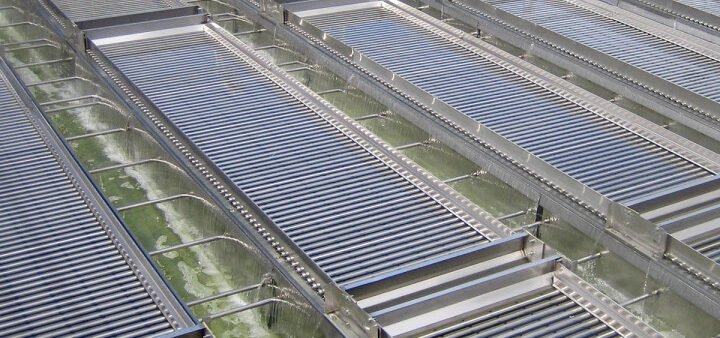
Plate settlers, also known as lamella clarifiers or inclined plate settlers, are devices used in water and wastewater treatment to separate solids from liquids. They consist of a series of inclined plates that facilitate the settling of suspended particles, allowing for the efficient removal of solids from water.
The Terminology Problem
Few technologies carry as many interchangeable names, and the variation causes real confusion during specification. Plate settler, lamella clarifier, lamella settler, inclined plate settler, slant plate clarifier, and tube settler all describe the same underlying principle of inclined-surface settling. The only distinction with any technical substance is between plates and tubes: plate packs use flat parallel sheets, while tube settlers use bundles of tubes with square, hexagonal, or chevron cross-sections. Tube modules are generally lighter, easier to retrofit into an existing basin, and simpler to remove for cleaning; plate packs are more robust and better suited to heavier solids loading. Everything else in that list is a naming preference rather than a difference in equipment.
The Principle of Operation
The operation of plate settlers is based on the principle of gravity sedimentation. When water containing suspended solids flows through the inclined plates, the particles settle onto the plate surfaces due to gravity. The inclined design of the plates ensures that the settled particles slide down the plates into a collection zone, where they can be removed as sludge.
The critical insight is that a particle no longer has to settle the full depth of the basin — it only has to reach the plate immediately below it, a distance measured in centimetres rather than metres. That reduction in settling distance is what allows the same clarification to be achieved in a fraction of the volume, and it explains why plate settlers are almost always the answer when capacity must increase within an existing tank.
Plate Settlers Subcategory Overview
The material beneath this hub covers the variants of inclined-surface settling and the one genuinely distinct application within the family.
Plate and Tube Configurations
Coverage of tube settlers addresses the tubular variant, which dominates retrofits into existing rectangular basins because modules are light enough to be installed on a support frame without structural modification. Material on the inclined plate clarifier addresses the plate configuration and its design considerations, while coverage of the slant plate clarifier and of lamella plate settlers addresses the same device under the naming conventions used by different manufacturers and in different industries. Anyone comparing proposals will encounter all of these terms, and the useful comparison is on projected settling area, plate spacing, angle, and materials rather than on nomenclature.
Oil and Water Separation
One application inverts the principle entirely. Material on the inclined plate clarifier for oil/water separation addresses the use of inclined plate packs to separate oil droplets that rise rather than solids that sink. The geometry is the same and the physics is the same — a droplet only has to travel to the plate immediately above it — but the collection arrangement is reversed, with oil skimmed from the surface rather than sludge drawn from a hopper. This is the basis of the corrugated plate interceptor used widely in refinery, petrochemical, and industrial oily water treatment, and it is the one member of this family that does a genuinely different job.
Design and Structure of Plate Settlers
Materials Used
Plate settlers are typically constructed from durable materials such as stainless steel, fiberglass, or PVC. The choice of material depends on the specific application, water quality, and environmental conditions.
Plate Configuration
The plates in a settler are usually arranged at an angle between 45 and 60 degrees. This angle is crucial as it allows for the effective sliding of settled particles into the sludge collection zone. The spacing between the plates is also carefully calculated to optimize the settling process while preventing clogging.
Both parameters are chosen for specific reasons that are worth understanding. The angle must be steep enough for accumulated sludge to slide down the plate under its own weight against the upward water flow — below roughly 45 degrees, solids accumulate on the plates and the pack progressively blinds. Fifty-five degrees is the most common compromise, steep enough to be reliably self-cleaning while retaining most of the projected area benefit that a shallower angle would offer. Spacing typically runs 50 to 80 millimetres perpendicular to the plate surface: closer spacing packs more area into the same volume but increases the risk of bridging and blockage, while wider spacing is more forgiving and less efficient.
Flow Regime
Inclined settling only works in laminar flow. Turbulence resuspends settled material and destroys the separation the geometry is designed to achieve, so the flow within the plate channels must remain smooth and evenly distributed. This is why inlet design matters disproportionately in these systems, and why a plate pack fed unevenly performs far below its rating regardless of how much area it contains.
Sludge Collection System
A vital component of plate settlers is the sludge collection system. As particles settle and slide down the plates, they accumulate in the sludge hopper. Effective sludge removal is essential to maintain the efficiency of the settler and prevent the buildup of solids.
The relationship between the sludge blanket and the plate pack is the operational detail that most often goes wrong. If solids accumulate faster than they are withdrawn, the blanket rises until it reaches the bottom edge of the plates, at which point solids are re-entrained into the settling zone and effluent quality collapses rapidly. Sludge withdrawal must therefore be sized and operated against actual solids loading rather than set once and left, and adequate hopper volume with a properly sloped floor is what makes reliable withdrawal possible.
Sizing on Projected Area
Plate settler sizing is governed by projected area rather than by plate area, and confusing the two is the single most common error in evaluating proposals.
Projected Versus Actual Area
The effective settling area of an inclined plate is its actual surface area multiplied by the cosine of its angle from horizontal — its projection onto the horizontal plane. At 55 degrees, that factor is about 0.574, so a plate contributes only 57 percent of its physical area to settling performance. A proposal quoting total plate area rather than projected area therefore overstates capability by roughly 75 percent, and comparing one supplier’s projected area against another’s total area produces a meaningless result. Always establish which figure is being quoted.
N = number of plates | L = plate length | W = plate width | θ = angle from horizontal
Loading rate = Q ÷ Aprojected
Hydraulic Loading Rate
Loading is expressed as flow divided by projected area, in the same units as the surface overflow rate of a conventional clarifier — and that equivalence is the whole point, since it allows the two to be compared directly. Typical design loading on projected area falls in the range of roughly 0.5 to 2.0 cubic metres per square metre per hour, varying substantially with the application, the quality of upstream coagulation and flocculation, and the settling characteristics of the solids. Well-flocculated, dense solids tolerate the upper end; light or poorly conditioned solids require the lower. The principles governing this are exactly those of settling theory as applied to any clarifier — the plates change the geometry, not the physics.
Worked Example: Footprint Compared With a Conventional Clarifier
Consider a flow of 100 cubic metres per hour requiring clarification at a loading rate of 1.0 metre per hour.
A conventional clarifier needs 100 square metres of plan area — a circular tank of roughly 11.3 metres diameter, or a rectangular basin of equivalent area, plus freeboard, walkways, and the mechanism.
A plate settler achieving the same 100 square metres of projected area with plates 2.5 metres long by 1.2 metres wide at 55 degrees gets 2.5 × 1.2 × 0.574 = 1.72 square metres of projected area per plate, so 58 plates are required. At 60 millimetre perpendicular spacing, the horizontal extent of that pack is 58 × 0.06 ÷ sin(55°), or about 4.25 metres. With a pack width of 1.2 metres, the settling zone occupies roughly 5 square metres of plan area.
That is a twentyfold reduction in the settling area footprint. In practice the realized saving is smaller — typically five to tenfold — because the basin must still accommodate inlet distribution, a sludge hopper of adequate volume, effluent collection, and access for plate removal. But the comparison explains why plate settlers dominate capacity upgrades: a plant that cannot build another clarifier can frequently fit the equivalent settling area inside a tank it already owns.
Comparison of Clarification Options
The table below compares inclined-surface settling against the alternatives it is usually weighed against. Values are typical or approximate and vary with application and solids characteristics.
| Technology | Loading Basis | Relative Footprint | Upstream Requirement | Best-Fit Applications | Main Limitation |
|---|---|---|---|---|---|
| Plate settler / lamella | Flow ÷ projected area | Smallest for a given settling area | Good coagulation and flocculation essential | Capacity upgrades within existing tanks; constrained sites | Fouling and blinding; needs clean, well-conditioned feed |
| Tube settler module | Flow ÷ projected area | Same principle, lighter installation | As above | Retrofit into existing rectangular basins | Less robust to heavy solids loading |
| Conventional circular clarifier | Surface overflow rate on plan area | Largest | Tolerant of variable conditioning | Primary and secondary clarification at scale | Land requirement; long construction |
| Rectangular clarifier | Surface overflow rate on plan area | Large, but efficient in plan layout | Tolerant | Where common-wall construction saves cost | Land requirement; short-circuiting risk |
| Dissolved air flotation | Flow ÷ plan area with recycle | Compact | Coagulation required; air saturation system | Light or buoyant solids, algae, oil and grease | Energy for saturation; mechanical complexity |
| Corrugated plate interceptor | Flow ÷ projected area, rising droplets | Compact | Free oil, not emulsified | Refinery and industrial oily water | Does not remove emulsified or dissolved oil |
The comparison that arises most often is against a primary clarifier, and the trade is consistent: the conventional unit is larger, simpler, more tolerant of poor upstream conditioning, and effectively maintenance-free in the settling zone, while the plate pack achieves the same duty in far less space at the cost of requiring good flocculation and periodic cleaning. Where land is available and the influent is variable, conventional wins. Where space is the binding constraint, inclined settling generally has no real competitor. Note that the terminology overlaps here too — material published under lamella clarifiers covers the same equipment discussed throughout this article.
Advantages of Plate Settlers
1. Space Efficiency
One of the primary advantages of plate settlers is their compact design. By utilizing inclined plates, they provide a larger effective settling area within a smaller footprint compared to traditional sedimentation tanks.
2. Enhanced Settling Efficiency
The design of plate settlers significantly enhances the settling efficiency. The reduced distance particles need to travel to settle results in faster and more effective solid-liquid separation.
3. Cost-Effectiveness
Due to their compact design and efficiency, plate settlers can reduce the overall cost of water treatment facilities. They require less space, which translates into lower construction and operational costs.
4. Versatility
Plate settlers can be used in a variety of applications, from municipal water treatment to industrial processes. Their adaptability makes them a valuable component in diverse water treatment systems.
5. Retrofit Capability
The advantage that drives most installations is the ability to uprate an existing basin without building anything new. Installing plate or tube modules into an existing clarifier can substantially increase its hydraulic capacity within the same concrete, avoiding the land acquisition, permitting, and construction timeline that a new clarifier would require. For a plant facing growth or a tightened effluent limit with no room to expand, this is frequently the only practical option.
Applications of Plate Settlers
Municipal Water Treatment
In municipal water treatment plants, plate settlers are used to remove suspended solids from raw water. This process is essential for producing clean drinking water and ensuring compliance with health standards.
Industrial Water Treatment
Industries such as mining, food processing, and chemical manufacturing use plate settlers to treat process water and wastewater. They help in recovering valuable resources and reducing environmental impact.
Wastewater Treatment
Plate settlers play a crucial role in wastewater treatment by removing solids and reducing the load on subsequent treatment processes. This improves the overall efficiency of the treatment plant.
Stormwater Management
In stormwater management, plate settlers are used to treat runoff, removing pollutants and preventing contamination of natural water bodies.
Challenges and Considerations
Maintenance Requirements
Regular maintenance is necessary to ensure the optimal performance of plate settlers. This includes cleaning the plates to prevent fouling and ensuring the sludge removal system functions correctly.
Fouling takes two forms and both are predictable. Biological growth develops on plate surfaces wherever water is warm and nutrients are present, progressively narrowing the channels and disturbing the laminar flow the system depends on. Chemical scaling occurs where the water is scale-forming, particularly downstream of lime softening. Either eventually requires the pack to be removed and cleaned, which means access for plate removal must be designed in from the start — a plate pack that cannot be lifted out is a plate pack that will eventually be abandoned in place.
Design Considerations
The design of plate settlers must be tailored to the specific application. Factors such as water quality, flow rate, and particle characteristics must be considered to optimize performance.
Upstream Conditioning
Inclined settling is unforgiving of poor upstream treatment. The technology relies on particles that have been coagulated and flocculated into settleable form, and it will not compensate for inadequate chemistry the way a large conventional clarifier partially can. A plate settler fed poorly flocculated water passes solids straight through, and the diagnosis in such cases almost always lies upstream in the rapid mix and flocculation stages rather than in the settler itself.
Initial Investment
While plate settlers can be cost-effective in the long run, the initial investment may be higher compared to traditional sedimentation systems. However, the benefits often outweigh the initial costs.
Field Notes
Plate settlers fail in a small number of recognizable ways, and nearly all of them are visible on inspection before they appear in the effluent.
Commissioning and Inspection
Verify flow distribution across the pack at commissioning, ideally by observing surface behaviour at design flow — uneven distribution shows as visibly different flow patterns across the width and is far easier to correct at startup than to diagnose later. Record the effluent turbidity achieved at known flow and upstream coagulant dose, since that combination is the reference against which every later assessment is made. Confirm that the plate pack can actually be removed with the access and lifting equipment available on site, because discovering otherwise during the first cleaning is a genuine and recurring problem.
Pro Tip: Track the sludge blanket level relative to the bottom edge of the plate pack, not just the sludge withdrawal schedule. The blanket rising into the pack is the single most common cause of sudden effluent deterioration in these systems, and it produces a characteristic failure — performance is normal, then collapses over hours rather than degrading gradually. A blanket level measurement taken on the same schedule as effluent turbidity gives you the warning that turbidity alone does not, and it distinguishes a solids withdrawal problem from a coagulation problem in seconds rather than days.
Common Specification Mistakes
The most frequent error is comparing proposals on total plate area rather than projected area, which overstates capability by roughly 75 percent at typical angles. The second is specifying a plate settler where upstream coagulation and flocculation are inadequate or unreliable, since the technology cannot compensate for poor conditioning. The third is providing insufficient sludge hopper volume or withdrawal capacity, which allows the blanket to rise into the pack. The fourth is omitting plate removal access, which turns routine cleaning into a construction project. The fifth is neglecting inlet distribution design, which leaves a correctly sized pack performing well below its rating.
Common Mistake: Installing plate or tube modules to uprate an existing clarifier without checking whether the sludge collection system can handle the additional solids. The modules increase hydraulic capacity, which means more solids arrive per hour — but the hopper, scraper, and withdrawal pumping were sized for the original loading. The result is a blanket that rises into the pack under exactly the conditions the upgrade was meant to accommodate, and a retrofit that performs worse at high flow than the clarifier did before. Verify solids handling capacity as part of any capacity upgrade, not after.
Future Trends in Plate Settler Technology
Innovations in Materials
Advancements in materials science are leading to the development of more durable and efficient plate settlers. New materials offer improved resistance to corrosion and fouling, enhancing the longevity of these systems.
Integration with Advanced Treatment Technologies
Plate settlers are increasingly being integrated with advanced treatment technologies such as membrane filtration and biological treatment. This integration enhances the overall efficiency and effectiveness of water treatment processes.
Sustainability and Environmental Impact
There is a growing emphasis on sustainability in water treatment. Plate settlers contribute to this by reducing energy consumption and minimizing the environmental footprint of treatment facilities.
Design Details and Standards
Inclined settling equipment is governed by process design guidance and by state design criteria rather than by a dedicated product standard.
Applicable Standards and References
Design practice draws on the Recommended Standards for Water Works and Recommended Standards for Wastewater Facilities (the Ten States Standards), which address loading criteria for tube and plate settlers and the associated flocculation requirements; WEF Manual of Practice No. 8, Design of Water Resource Recovery Facilities, for clarification process design; AWWA Manual M37, Operational Control of Coagulation and Filtration Processes, for the upstream conditioning on which inclined settling depends; and the ASCE and AWWA water treatment plant design references for sedimentation basin configuration. Materials in contact with potable water require NSF/ANSI 61 certification. Concrete basins housing plate packs follow ACI 350 for environmental engineering concrete. Note that no consensus product standard governs plate geometry, spacing, or area rating, which is why proposals must be normalized to projected area before comparison.
Specification Checklist
- Design flow at average and peak, with the governing condition identified
- Influent solids characteristics, including settling behaviour and expected variability
- Required loading rate expressed on projected area, with its basis stated
- Projected area required, calculated and specified as the procurement basis
- Plate or tube geometry — length, width, angle, and perpendicular spacing — stated separately
- Materials selected for the water chemistry, with NSF/ANSI 61 where potable
- Upstream coagulation and flocculation provision confirmed adequate for the loading
- Inlet distribution design to achieve even flow across the full pack width
- Sludge hopper volume and withdrawal capacity sized against the actual solids loading
- Sludge blanket level instrumentation with an alarm below the pack bottom edge
- Plate pack removal access, lifting provision, and cleaning arrangements
- Fouling expectations assessed for biological growth and scaling potential
- For retrofits, verification that existing sludge collection can handle the uprated solids load
- Effluent collection arrangement designed to avoid drawing unevenly across the pack
Frequently Asked Questions
What is the difference between a plate settler and a lamella clarifier?
Nothing substantive — they are the same device under different names, as are inclined plate settlers and slant plate clarifiers. The only distinction with technical content is between plates and tubes: tube modules use bundles of tubes rather than flat sheets, are lighter and easier to retrofit and remove, while plate packs are more robust under heavier solids loading. Compare proposals on projected area, spacing, angle, and materials rather than on the name.
Why does the plate angle matter?
Because sludge must slide down the plate under its own weight against the upward water flow. Below roughly 45 degrees, solids accumulate on the plates and the pack progressively blinds. Steeper angles are reliably self-cleaning but reduce projected area, since effective area is the plate area multiplied by the cosine of the angle. Fifty-five degrees is the usual compromise.
How much footprint does a plate settler actually save?
The settling zone itself can be twenty times smaller than an equivalent conventional clarifier, as the worked example above shows. In practice the realized saving is five to tenfold, because the basin must still house inlet distribution, a sludge hopper of adequate volume, effluent collection, and plate removal access. That is still enough to fit equivalent settling capacity into a tank a plant already owns, which is why these systems dominate capacity upgrades.
Why did effluent quality collapse suddenly rather than degrading gradually?
Almost certainly the sludge blanket rising into the bottom of the plate pack. Once solids reach the pack they are re-entrained into the settling zone and performance fails over hours rather than days. Check blanket level before investigating coagulation, and check whether solids withdrawal is keeping pace with the loading arriving — particularly after any capacity upgrade.
Can a plate settler compensate for poor coagulation?
No, and less so than a conventional clarifier. Inclined settling relies on particles already flocculated into settleable form, and it passes poorly conditioned solids straight through. When a plate settler underperforms, the diagnosis usually lies upstream in rapid mix and flocculation rather than in the settler itself — which is why jar testing is the first step in troubleshooting one.
Key Takeaways
- Compare on projected area, never total plate area — at 55 degrees a plate contributes only about 57 percent of its physical area, so quoting total area overstates capability by roughly 75 percent.
- The names are interchangeable — plate settler, lamella clarifier, inclined plate, slant plate, and tube settler describe the same principle; only plates versus tubes is a real distinction.
- Angle is a self-cleaning requirement — below about 45 degrees sludge accumulates and the pack blinds, which is why 55 degrees is the common compromise.
- The footprint saving is real but not the headline figure — twentyfold on settling area, five to tenfold once hopper, inlet, and access are included.
- Upstream conditioning is non-negotiable — plate settlers pass poorly flocculated solids straight through and cannot compensate for weak coagulation.
- Watch the blanket, not just the turbidity — a blanket rising into the pack causes sudden collapse rather than gradual decline, and level measurement gives the warning turbidity does not.
- Check solids handling before any retrofit — modules raise hydraulic capacity, but the hopper and withdrawal system were sized for the original loading.
Conclusion
Plate settlers are a vital component in modern water treatment systems, offering efficient and cost-effective solutions for solid-liquid separation. Their compact design, enhanced settling efficiency, and versatility make them an attractive option for a wide range of applications. As technology continues to evolve, plate settlers are poised to play an even more significant role in ensuring the availability of clean, safe water for future generations.
By understanding the design, function, and benefits of plate settlers, water treatment professionals can make informed decisions about their implementation and optimization. This knowledge is crucial for advancing the field of water treatment and addressing the growing challenges of water scarcity and pollution.
The evaluation sequence that avoids most disappointment is short: establish the required loading rate on projected area, normalize every proposal to projected area before comparing, confirm that upstream coagulation and flocculation can reliably deliver settleable floc, size the sludge hopper and withdrawal against the actual solids loading rather than the original design, and make sure the pack can be lifted out for cleaning. Specified that way, inclined settling delivers capacity inside existing concrete that would otherwise require a new basin. Specified on total plate area and optimistic loading, it delivers a pack that blinds, a blanket that rises into it, and an effluent that fails without warning.