
Sand Filtration in Wastewater Treatment: Efficiency and Application
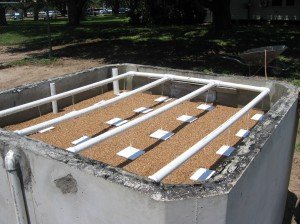
Sand filtration is a widely accepted and effective method for treating wastewater before it is discharged into the environment or reused. It operates by passing wastewater through layers of sand where contaminants are physically captured or biologically treated. The simplicity of design and operation makes sand filters a practical choice for removing suspended solids, reducing turbidity, and even mitigating certain types of bacteria and viruses in wastewater.
In the broader context of wastewater treatment, sand filtration serves as a tertiary treatment step, following primary and secondary processes. While primary treatment focuses on removing gross solids and settling sludge, and secondary treatment on breaking down organic matter biologically, sand filtration further purifies the effluent. This method is particularly valuable in scenarios where water scarcity demands high-quality water reuse or stringent environmental regulations require exceptionally low levels of certain pollutants before water reenters natural waterways.
Key Takeaways
- Sand filtration is a vital tertiary treatment process in wastewater management.
- The technology stands out for its simplicity and effectiveness in purifying effluent.
- It plays a key role in protecting water resources and meeting regulatory standards.
Basic Principles of Sand Filtration
Sand filtration is a well-established method for treating wastewater, employing natural sand to capture and remove impurities from the water as it flows through a sand bed.
Mechanics of Sand Filtration
The mechanics of sand filtration for wastewater treatment operate on the principle of physical straining and biological processes. As wastewater percolates through a sand filter, multiple layers of sand with varying grain sizes trap suspended solids. Fine sand particles perform the majority of filtration, capturing finer particles as the water moves downward. The presence of microorganisms on sand grains also facilitates the degradation of organic material through biological action.
In addition to mechanical straining, adsorption plays a critical role. Particles adhere to the sand surface due to molecular forces, which is especially crucial for the removal of colloidal particles too small to be physically filtered out. Furthermore, the depth of the sand column determines the level of purification; deeper filters can potentially enhance treatment efficiency due to extended contact time.
Four distinct capture mechanisms operate simultaneously within a sand bed, and their relative contribution shifts with particle size. Straining dominates for particles larger than roughly one-tenth of the pore opening and occurs mainly in the top few centimeters. Sedimentation within the pore spaces captures mid-range particles as flow slows through tortuous channels. Interception and diffusion govern colloidal and submicron particles, which are carried against grain surfaces by Brownian motion and held there by van der Waals forces. Biological degradation becomes significant only where the bed is allowed to ripen, as in slow filtration. Understanding which mechanism dominates for a given influent is what separates a filter that runs a full cycle from one that blinds at the surface within hours.
Types of Sand Filters
There are primarily two types of sand filters used in the wastewater treatment process: rapid (gravity) sand filters and slow sand filters.
- Rapid (Gravity) Sand Filters:
- Use larger sand grains and operate at high flow rates.
- Typically include a system to wash the sand, which allows these filters to handle heavier loads.
- Efficient for treating large volumes of wastewater within industrial or municipal plants.
- Slow Sand Filters:
- Utilize finer sand and operate at a comparatively slow rate.
- Often found in small to medium-sized applications.
- The slower filtration process offers enhanced removal of microorganisms due to prolonged contact time.
Both systems require proper construction and maintenance to ensure effective operation and to prevent issues such as channeling, where water bypasses the sand and reduces filtration efficiency. Selection between rapid and slow sand filtration methods depends on the specific requirements of the wastewater treatment application, including the quality of the effluent and operational demands.
Subcategory Overview: The Major Areas of Sand Filtration
Sand filtration is broad enough that most practical questions fall into one of four areas: the media itself and how granular beds behave, the filtration process and its governing hydraulics, the specific filter types and their operating regimes, and the packaged systems that plants actually purchase and install. Each is covered in depth below and on its own dedicated page.
Granular Media Filtration
Granular media filtration is the parent discipline that sand filtration belongs to, covering any bed of loose granular material used to capture particulates from water. Sand is the most common medium, but anthracite, garnet, ilmenite, and engineered ceramic media all appear in the same role, frequently layered together in dual- and multi-media configurations. The governing design variables are the same across all of them: effective size (typically expressed as the d10, the sieve opening that passes 10 percent of the media by weight), uniformity coefficient, bed depth, and the resulting L/d ratio of bed depth to grain diameter. A single-medium sand bed with an effective size of 0.45 to 0.55 mm remains the reference case, while dual-media anthracite-over-sand beds achieve deeper penetration of solids and longer runs at the same headloss. Understanding granular media behavior generally is what allows a designer to judge whether sand is the right medium for a given influent or whether a layered bed will pay for itself in extended run time.
Sand Filtration Process
The sand filtration process covers the operating cycle itself: ripening, the productive run, terminal headloss or turbidity breakthrough, and backwash recovery. Every filter run follows this curve, and the economics of the filter are set by how long the productive portion of it lasts. Ripening is the initial period, typically 15 to 60 minutes, during which effluent quality improves as retained particles create additional capture sites. The productive run continues until either headloss reaches the available driving head or effluent turbidity breaks through the target, and a well-designed filter reaches both limits at approximately the same time. Filter-to-waste during ripening is standard practice where effluent quality is tightly regulated. The process view is also where coagulation and flocculation upstream enter the picture, since filterability is determined far more by particle conditioning than by anything happening inside the bed.
Sand Filtration Types
The sand filtration types divide primarily along loading rate, which drives everything else about the design. Slow sand filters operate at approximately 0.1 to 0.3 m/h and rely on a biologically active surface layer, the schmutzdecke, for pathogen removal; they need no coagulation, no backwash system, and very little operator attention, but they demand a large footprint and periodic manual scraping. Rapid gravity filters operate at approximately 5 to 15 m/h, require upstream coagulation, and are cleaned by backwash on a cycle measured in hours or days. Pressure sand filters place the same media in a steel vessel, which suits industrial and package-plant duty where the water is already under pressure. Continuous-backwash (moving-bed) filters clean a portion of the media constantly and never come offline, which suits tertiary polishing at plants that cannot tolerate a filter outage. Intermittent and recirculating sand filters occupy a separate niche in decentralized and onsite wastewater treatment.
Sand Filtration Systems
Complete sand filtration systems encompass more than the bed: influent distribution and flow splitting, the underdrain and support gravel, surface wash or air scour equipment, backwash supply and waste handling, instrumentation, and controls. In practice most filter performance problems trace to one of these ancillaries rather than to the media. Underdrain selection — nozzle plate, header-lateral, or block-type — determines how evenly backwash water distributes across the bed, and uneven distribution produces mudballs and media loss faster than any other single cause. Air scour, where fitted, dramatically improves cleaning efficiency and reduces backwash water volume, typically cutting wash water from around 4 percent of production to 2 percent or less. Systems-level design also decides how many filters a plant needs, since taking one filter offline for backwash must not push the remainder above their design rate.
Design and Implementation
Effective sand filtration in wastewater relies heavily on meticulous design and precise implementation. The approach entails selecting appropriate materials and considering a range of design parameters to ensure optimal performance. Proper construction and installation processes must be followed to maintain system integrity.
Components and Materials
Sand Filters consist of layers of sand and gravel that act as the filtration medium. The sand used is typically number 20 silica sand, with a specific size range that ensures effective filtration without causing significant head loss. Supporting layers of gravel underneath the sand bed are graded in size to prevent the sand from migrating further into the filter. Additionally, underdrains are essential for collecting filtered water, while inlet and outlet structures maintain proper water distribution and collection.
Design Considerations
The key factors in the design phase include hydraulic loading rates, the size of the filter, and the depth of the sand bed, all of which influence the filter’s efficacy and maintenance frequency. Designers often calculate the surface area of the filter based on the expected flow rate and desired quality of treated effluent. Moreover, backwashing facilities are a critical component to ensure the long-term performance of the filter by clearing accumulations of trapped solids.
Construction and Installation
Construction begins with site preparation, ensuring that the ground is stable and at an adequate elevation to facilitate gravity flow through the system. Installation of the sand filter follows a sequenced process: laying the gravel support layers, adding the sand layer, and installing the inlet and outlet structures and underdrain system. The layering process requires precision to maintain distinct boundaries between different materials, which is crucial for proper filtration. After assembly, rigorous testing of the system ensures that it operates as designed before it handles wastewater full-time.
Comparing Sand Filtration Against Alternative Tertiary Technologies
Sand filtration is one of several ways to polish secondary effluent, and the right choice depends on the target effluent quality, the available footprint, and the operating staff’s capacity. The table below places the principal sand filter configurations alongside the technologies that most often compete with them for the same tertiary duty.
| Technology | Typical Loading Rate | Best-Fit Applications | Limitations | Relative Cost | Operator Attention |
|---|---|---|---|---|---|
| Slow Sand Filtration | ~0.1–0.3 m/h | Small systems, low-turbidity source water, minimal chemical use | Very large footprint; manual scraping; poor tolerance of high solids | Low O&M, high land cost | Low |
| Rapid Gravity Sand Filtration | ~5–15 m/h | Municipal tertiary polishing; conventional treatment trains | Requires coagulation and backwash infrastructure | Moderate | Moderate |
| Pressure Sand Filtration | ~10–20 m/h | Industrial duty, package plants, pressurized systems | Bed condition cannot be observed; media loss goes unnoticed | Moderate | Moderate |
| Cloth Media Filtration | ~5–12 m/h | Tertiary polishing in tight footprints; retrofit into existing basins | Media replacement cost; less robust to high solids loading | Moderate to high | Low to moderate |
| Membrane Filtration (MF/UF) | Flux-based | Reuse-grade effluent; absolute pathogen barrier required | High energy and capital cost; fouling management; membrane replacement | High | High |
| Activated Carbon Filtration | ~5–15 m/h | Dissolved organics, taste and odor, trace contaminants | Not a primary solids barrier; media regeneration or replacement cost | Moderate to high | Moderate |
The decision screen is straightforward in most cases. If the requirement is solids and turbidity removal at reasonable cost with staff who are comfortable with conventional equipment, sand filtration is the default. If the requirement is an absolute pathogen barrier or reuse-grade effluent, membranes are the answer regardless of cost. If the constraint is footprint inside an existing structure, cloth media usually wins. If the target is dissolved rather than suspended material, no granular solids filter of any kind will do the job.
Selection and Specification Framework
Specifying a sand filter is a matter of matching media gradation, bed depth, and loading rate to the influent and the required effluent, then verifying that the backwash system can actually clean the bed you have specified.
Defining the Duty Before the Media
The specification sequence begins with influent characterization: design and peak flow, influent turbidity or TSS with its variability, particle size distribution, and whether coagulation will be applied upstream. Secondary effluent entering a tertiary filter typically carries 10 to 30 mg/L TSS, and a well-operated rapid sand filter will bring that to below 5 to 10 mg/L. If the discharge permit requires consistently lower values, chemical conditioning ahead of the filter is not optional. Filterability testing on actual plant effluent, rather than assumed values, is the only reliable basis for the numbers that follow.
Sizing and Media Selection
Worked example: a plant filtering 8,000 m³/d (approximately 333 m³/h) at a design rate of 10 m/h requires 33.3 m² of filter area. With one filter offline for backwash, at least four cells of roughly 8.5 m² each are needed so that the remaining three operate at approximately 13 m/h during a wash — within the accepted peak rate. Media would typically be specified at 0.45 to 0.55 mm effective size with a uniformity coefficient below 1.5, at a bed depth of 750 to 900 mm, giving an L/d ratio comfortably above 1,000. Backwash must be sized to achieve 20 to 30 percent bed expansion at the design water temperature, since cold water is denser and needs a lower rate to reach the same expansion — specifying backwash at summer conditions and operating in winter fluidizes the bed and washes media to waste.
Comparing Against Alternative Filtration Approaches
Sand filters should always be priced against the alternatives before being adopted by default. Where the driving head is available and the plant hydraulic profile allows it, gravity filtration avoids the pumping energy of a pressurized system entirely, and this is the configuration most municipal tertiary installations adopt. Where footprint is the binding constraint and the filter must fit inside an existing basin, cloth media filtration achieves comparable effluent quality at a fraction of the plan area, at a higher media replacement cost. Where the treatment objective includes dissolved organics, taste and odor compounds, or trace contaminants rather than suspended solids alone, activated carbon filtration is typically installed downstream of the sand filter rather than instead of it, with the sand bed protecting the carbon from premature fouling.
Matching the Choice to Plant Size and Staffing
Small systems with intermittent operator coverage generally do better with slow sand or continuous-backwash filters, both of which fail gracefully and need no chemical dosing. Larger plants with instrumented operation can run rapid filters near their design limits and capture the full economic benefit of the higher loading rate. As a general rule, the higher the loading rate specified, the more upstream chemical control and operator attention the installation requires, and that operating burden belongs in the lifecycle comparison alongside capital cost.
Operation of Sand Filters
Sand filters play a crucial role in wastewater treatment by providing high-quality effluent through a relatively simple process. Proper operation, maintenance, and monitoring are essential for the effectiveness of sand filtration installations.
Starting and Stopping Procedures
When initiating the operation of a sand filter, wastewater is gradually introduced to the system to prevent disturbance of the sand medium. It is important to ensure that the flow rate is maintained within the design limits to prevent any system overflow or underflow. When stopping the system, the flow is similarly reduced in a controlled manner, followed by draining the filter to avoid stagnation and potential clogging during idle periods.
Maintenance Requirements
Routine maintenance of sand filters is mandatory to ensure their longevity and performance. This typically includes the inspection and cleaning of the inlet and outlet pipes to prevent blockages. The sand medium must be periodically raked to prevent channeling, and eventually, it must be replaced to maintain its filtration capabilities. Attention should be given to the surrounding vegetation to prevent root intrusion into the filter bed.
Monitoring and Controlling Performance
Effective monitoring of a sand filter system involves regular checking of the effluent quality, including turbidity and microbial content, to ensure compliance with discharge standards. Control of the system’s performance is achieved by adjusting the hydraulic loading rate or the backwashing frequency based on the observed effluent quality. Regular sampling and analysis are essential for timely adjustments to keep the system functioning optimally.
By following these procedures and requirements, sand filters can consistently provide high-quality wastewater treatment that adheres to environmental regulations.
Field Notes
Most sand filter problems encountered in the field are not media problems. They are backwash problems, distribution problems, or upstream chemistry problems that show up as apparent filter failure.
Commissioning Considerations
New media must be washed and the fines removed before the filter goes into service, or the first several runs will show elevated effluent turbidity and unusually rapid headloss development. Measure and record the clean-bed headloss at design rate during commissioning; without that baseline, later headloss readings cannot be interpreted. Verify backwash expansion by direct measurement rather than by trusting the calculated rate — a simple sludge judge or a marked probe will show whether the bed is expanding 20 to 30 percent or is either underfluidized or being blown to waste. Confirm even backwash distribution by observing the surface boil across the full plan area, and correct underdrain problems before the plant accepts the filter, because they become far more expensive to address once the media is in place.
Common Specification Mistakes
The most frequent error is specifying media by nominal sand size rather than by effective size and uniformity coefficient, which allows a supplier to deliver a poorly graded bed that meets the letter of the specification and performs badly. A close second is sizing backwash for average water temperature rather than the coldest expected condition, which causes media loss every winter. Designers also routinely omit filter-to-waste provisions, then discover that ripening turbidity spikes put the plant out of compliance at every filter return. Finally, filters are frequently specified without enough cells to maintain the design rate on the remaining units during a backwash, which forces operators to either exceed the design rate or defer washes past the point of effective cleaning.
Operations and Maintenance Across Configurations
Maintenance burden varies sharply by filter type. Slow sand filters need almost no daily attention but require periodic scraping of the schmutzdecke and eventual resanding, both labor-intensive manual operations. Rapid gravity filters demand attention to backwash quality and media condition but very little between washes. Pressure filters carry the additional risk that bed condition cannot be observed, so media loss and mudball formation can progress unnoticed for years — annual media coring and depth measurement should be a standing item for any pressure installation. Continuous-backwash filters shift the maintenance burden onto the airlift and media recirculation mechanism rather than the media itself.
Troubleshooting by Symptom
Mudballs and surface cracking indicate inadequate backwash — usually insufficient expansion, missing air scour, or uneven underdrain distribution. Media loss to the backwash trough points to excessive backwash rate, often the result of a cold-water rate never being derated from the summer setting. Persistent turbidity breakthrough with normal headloss development indicates that particles are passing through the bed rather than being captured, which points upstream to coagulation rather than to the filter. Air binding, marked by rapidly rising headloss and gas bubbles in the effluent, occurs when negative pressure develops within the bed and is corrected by raising the water level above the media or reducing the terminal headloss setpoint.
Design Details and Standards
The parameters below define the specification envelope for most municipal and industrial sand filtration installations. All values are typical or approximate and must be confirmed against site-specific water quality and applicable state design standards.
Key Design Parameters
- Effective size (d10): approximately 0.45–0.55 mm for single-medium rapid sand; 0.15–0.35 mm for slow sand
- Uniformity coefficient: below 1.5 for rapid filters; below 2.5 for slow sand
- Bed depth: approximately 600–900 mm for rapid sand; 800–1,200 mm for slow sand
- L/d ratio: generally above 1,000 for single-medium beds
- Filtration rate: approximately 5–15 m/h rapid gravity; 0.1–0.3 m/h slow sand
- Backwash rate: sized for 20–30% bed expansion at design water temperature
- Backwash duration: typically 8–15 minutes, plus air scour where fitted
- Backwash water use: approximately 2–4% of filtered production
- Support gravel: graded layers, typically 300–450 mm total depth
- Terminal headloss: commonly 2.0–2.5 m for gravity filters
Applicable Standards and References
Design practice for granular media filtration is addressed by AWWA standards for filtering material and by AWWA manuals of practice covering water treatment plant design, by Water Environment Federation manuals of practice for wastewater treatment plant design, and by the Ten States Standards (Recommended Standards for Water Works and for Wastewater Facilities), which many state regulatory agencies adopt as the baseline design reference. Filter media gradation and testing follow ASTM sieve analysis methods. Discharge requirements for tertiary filtration at municipal facilities are established through NPDES permits issued under the Clean Water Act, and state permitting agencies frequently impose design criteria more stringent than the national baseline.
Specification Checklist
- Design flow, peak flow, and the ratio between them
- Influent TSS and turbidity, stated as a range with seasonal variability
- Required effluent quality, stated as a guaranteed value at peak flow
- Filterability or pilot data on actual plant effluent
- Media effective size, uniformity coefficient, specific gravity, and bed depth
- Support gravel gradation and total depth
- Number of filter cells and the loading rate on remaining cells during backwash
- Underdrain type and evidence of even backwash distribution
- Backwash rate at minimum and maximum water temperature, with expansion percentage stated
- Air scour provision, rate, and sequence
- Backwash supply source, waste handling, and return point to the plant
- Filter-to-waste provision and ripening duration
- Upstream coagulation and flocculation provisions
- Instrumentation: headloss, effluent turbidity per filter, flow, and level
Performance and Efficiency
Sand filtration serves as a crucial stage in wastewater treatment, designed to remove particulate matter and microorganisms. Its effectiveness directly impacts the quality of water output, with efficient operation essential for meeting environmental standards.
Evaluating Filtration Effectiveness
Effectiveness in sand filtration is typically assessed by measuring turbidity and the concentration of contaminants before and after the filtration process. The primary function of sand filters is to trap and remove solid particles from wastewater, thus clarity and purity levels post-filtration are key indicators of performance. For instance, intermittent sand filters are capable of removing up to 99% of bacteria and most suspended solids from wastewater, significantly improving the effluent quality.
Factors Influencing Performance
Several factors affect the performance of sand filtration systems:
- Grain Size: The size of the sand grains directly relates to the filter’s ability to retain particles. Finer grains can capture smaller particles but may lead to clogging, requiring more frequent maintenance.
- Filtration Rate: The rate at which water passes through the filter media influences the contact time and, hence, the overall efficacy of the filtration. A slower rate usually results in better contaminant removal but reduces the processing capacity of the treatment facility.
- Backwashing Frequency: Proper maintenance, including regular backwashing, ensures the removal of detained particles from the filter, maintaining its efficiency and prolonging its lifespan.
- Filter Depth: The depth of the filter bed impacts the path length that wastewater must travel. A greater depth increases the likelihood of particle removal, as it provides more opportunities for filtration to occur.
In conclusion, the performance and efficiency of sand filtration in wastewater treatment are determined by a multitude of factors that require careful consideration and routine evaluation to ensure optimal operation.
Environmental Impact
Sand filtration is a wastewater treatment method that has significant environmental advantages and considerations. It involves percolating wastewater through a bed of sand that traps particulate matter and provides a degree of biological treatment.
Sustainability Considerations
Sand filtration systems contribute positively to environmental sustainability. They require less energy compared to other advanced wastewater treatment methods, as they often utilize gravity flow to move water through the filter. This leads to reduced carbon emissions and can contribute to a community’s sustainable infrastructure. Additionally, they extend the life of septic systems by providing additional treatment that can protect local water resources from contamination.
Waste Generation and Handling
Waste generation from sand filtration systems typically involves spent filter materials and excess biomass. Handling this waste responsibly is crucial as improper disposal can lead to environmental pollution. Spent sand must be replaced periodically, and its removal must be managed safely and sustainably. Treatment of the backwash water, which contains concentrated impurities, is also necessary to prevent negative environmental impacts.
Backwash water volume deserves particular attention in any sustainability assessment, since it represents production water that must be recycled through the plant rather than discharged. At 2 to 4 percent of filtered production, backwash return imposes a measurable recycle load on upstream processes, and plants that return it without equalization frequently create solids surges in the primary or secondary stages. Equalizing and returning backwash at a controlled rate is the single most effective way to limit that impact.
Legal and Regulatory Framework
In the context of sand filtration in wastewater treatment, the regulatory framework plays a crucial role in ensuring the safe and effective management of water quality. This framework comprises standards and guidelines that dictate the design and operation of sand filtration systems, as well as compliance and enforcement mechanisms to uphold these regulations.
Standards and Guidelines
Standards in wastewater treatment delineate the minimum requirements for sand filtration systems to remove contaminants from water effectively. The Environmental Protection Agency (EPA) has established several regulatory and guidance documents about water quality and wastewater management. These documents often outline the acceptable parameters for filtration systems, including sand filters, and the specific water quality outcomes they must achieve. Guidelines can include criteria for filter media, backwashing frequency, and effluent quality.
The Clean Water Act (CWA), under its National Pollutant Discharge Elimination System (NPDES), requires that wastewater treatment facilities, including those using sand filtration, adhere to effluent limitations. Compliance with the effluent guidelines, which are national regulatory standards for wastewater discharge, ensures the protection of surface waters and adherence to public health standards.
Compliance and Enforcement
Wastewater treatment facilities employing sand filtration are required to obtain necessary permits and regularly demonstrate that they meet water quality standards as part of the compliance process. Facilities must conduct periodic monitoring and report their findings to regulatory authorities. Enforcement actions can be taken if a facility is found to be out of compliance with regulatory standards.
The EPA and state environmental agencies are the primary bodies responsible for enforcement. They have the authority to impose penalties, require remedial actions, and, in some cases, shut down operations that fail to meet the regulations. For municipal wastewater treatment plants using sand filtration, the NPDES permits establish specific discharge limits and conditions to maintain compliance with the CWA.
Overall, the legal and regulatory framework for sand filtration in wastewater treatment underpins the system’s safety and efficacy, making it pivotal for environmental health and public safety. Compliance with this framework is essential for the continued operation of such treatment facilities.
Case Studies
Evaluating the practical applications of sand filtration in wastewater treatment, two notable aspects emerge: its instances of success and the lessons drawn from certain limitations. This section explores real-world scenarios where sand filtration has been applied and scrutinizes what worked and what required further improvement.
Successes of Sand Filtration
Case Study 1: A small-town wastewater treatment facility implemented a sand filtration system to tackle the increasing demands on its existing infrastructure. After the installation, they observed a significant reduction in suspended solids and pathogens in the effluent. The sand filter, which operated as a tertiary treatment stage, produced water clean enough to be safely discharged into the local water bodies, thereby adhering to the regulatory standards.
Case Study 2: On a larger scale, an industrial plant dealing with high-strength wastewater incorporated a sand filter to effectively remove heavy metals and other industrial contaminants. This system was designed to handle extreme variations in wastewater quality and quantity, showcasing sand filtration’s flexibility and resilience. The resulting effluent showed consistently low levels of pollutants, leading to reduced environmental impact and compliance with stringent discharge criteria.
Lessons Learned from Failures
Case Study 3: In a scenario where a municipal treatment plant experienced failures in its sand filtration unit, it was revealed that inadequate maintenance and irregular filtering media replacement led to clogging and inefficient filtration. This case emphasized the importance of regular upkeep and monitoring to ensure the longevity and performance of sand filtration systems.
Case Study 4: Another case involved a commercial agricultural complex where the sand filtration was unable to cope with the high levels of organic loadings due to the inadequate predigestion of effluent. This failure demonstrated the need for a proper assessment of influent wastewater characteristics and the importance of complementing sand filtration with appropriate pre-treatment processes to enhance overall system efficacy.
Future of Sand Filtration
Sand filtration has been a mainstay in wastewater treatment, and its future promises advancements in efficiency and efficacy. These imminent improvements stem from both innovative developments and ongoing research that enhances our understanding of filtration technology.
Innovative Developments
Researchers and engineers are continuously working on novel materials and methods to increase the performance of sand filtration systems. One emerging development involves the use of nano-coated sand that can enhance contaminant removal. This innovative approach increases the surface area available for filtration and introduces reactive sites for pollutant capture. The integration of smart sensors within sand filters is also gaining traction, allowing for real-time monitoring and adaptive control of the filtration process. These sensors can detect changes in water quality, prompting automatic adjustments to optimize performance.
Research and Trends
The body of research surrounding sand filtration is growing, focusing on areas such as material refinement, hydraulic optimization, and biofilm management. Comparative studies assess the efficacy of different sand types, some even exploring the potential of alternative granular materials that could offer better filtration qualities. Hydraulic research aims to fine-tune flow rates and pressure gradients to maximize the removal of contaminants while minimizing backwashing frequency and water waste. Additionally, understanding the role and control of biofilms in sand filters holds promise for improving the breakdown of organic pollutants and extending filter longevity.
Continuous per-filter turbidity monitoring, once reserved for surface water treatment plants under drinking water regulations, is increasingly appearing on tertiary wastewater filters as reuse requirements tighten. The practical effect is that filter performance becomes visible run by run rather than as a monthly composite, which changes how operators tune coagulation and set backwash triggers. Alongside this, several utilities have moved to condition-based rather than time-based backwash initiation, using headloss and turbidity setpoints to trigger washes, which typically reduces backwash water consumption while extending media life.
Frequently Asked Questions
What are the steps involved in the sand filtration process for treating wastewater?
The sand filtration process typically involves passing wastewater through layers of sand and gravel. Initially, larger sediments are removed by coarser layers, while finer particles are captured in the subsequent, finer layers of sand. Finally, the clarified water is collected from the bottom.
How does the media in a sand filter contribute to water purification?
The media in a sand filter, comprising different sizes of sand and gravel, play a crucial role by physically trapping suspended solids and by supporting the growth of beneficial microorganisms that biologically degrade contaminants, effectively purifying the water.
What are the primary advantages and disadvantages of using a sand filter in wastewater treatment?
Sand filters are valued for their simplicity, effectiveness in particle removal, and low operating costs. However, drawbacks include the potential for clogging and the requirement of occasional backwashing or media replacement to maintain efficiency.
In what ways does sand filter media need to be maintained or replaced in industrial filtration systems?
Maintenance of sand filter media involves routine monitoring and backwashing to remove accumulated solids. Over time, filter media may need to be replaced if it becomes too fine due to abrasion or if the biological layer (schmutzdecke) becomes too thick and hinders water flow.
How does an intermittent sand filter differ from continuous sand filters in wastewater treatment?
Intermittent sand filters are used sporadically and allow periods for drying and aeration, which aids in removing certain contaminants and resting the filter media. Continuous sand filters operate constantly, treating a consistent flow of wastewater without drying periods.
Can sand filters be used effectively for residential water treatment and what are their limitations?
Sand filters can be effective for residential water treatment, especially for sediment removal and some degree of biological purification. However, their limitations include space requirements, the need for regular maintenance, and less effectiveness on water-soluble pollutants or pathogens without additional treatment steps.
Key Takeaways for Specifiers and Operators
- Specify media by effective size and uniformity coefficient, never by nominal sand size — poorly graded media meeting a loose specification is a leading cause of underperformance.
- Size backwash for the coldest water you will see, not average conditions; a rate set at summer temperature will fluidize the bed and send media to waste every winter.
- Headloss and turbidity should terminate the run together — if one consistently arrives first, the media gradation or the upstream coagulation is mismatched to the duty.
- Filterability is set upstream; coagulation and flocculation performance determine filter run length far more than anything happening inside the bed.
- Provide enough cells to backwash without exceeding design rate on the remaining filters, or operators will be forced to defer washes past the point of effective cleaning.
- Short runs are a chemistry or media symptom, not a signal to wash more often; increasing wash frequency accelerates media loss without addressing the cause.
- Match the filter type to the operating staff — slow sand and continuous-backwash designs fail gracefully with minimal attention, while high-rate filters need instrumented, chemically controlled operation.
Conclusion
Sand filtration remains the default tertiary polishing technology for good reasons: it is mechanically simple, it uses well-understood materials, and it produces reliable effluent quality at a cost that most utilities can justify. What it demands in return is discipline in three areas — media specification, backwash design, and upstream chemical control. Installations that treat those as design requirements rather than operational details deliver consistent sub-10 mg/L TSS effluent for decades on the same basic equipment.
The specification path is worth following in order. Characterize the influent with real filterability data, set the loading rate from that, size the number of cells so the plant can wash a filter without exceeding design rate on the rest, select media by effective size and uniformity coefficient, then verify that the backwash system achieves 20 to 30 percent expansion at the coldest expected temperature. Price the result against the alternatives before committing, because where footprint is tight or the treatment objective is dissolved rather than suspended material, another technology will serve the plant better. Where the duty is solids removal at reasonable cost with conventional operating staff, sand filtration is still very hard to beat.